- Curious Reading Club
- Posts
- How “Valley of Forgetting” tells a complicated story
How “Valley of Forgetting” tells a complicated story
Three ways our book of the month will surprise you.

Bobbie Johnson
January 11, 2026
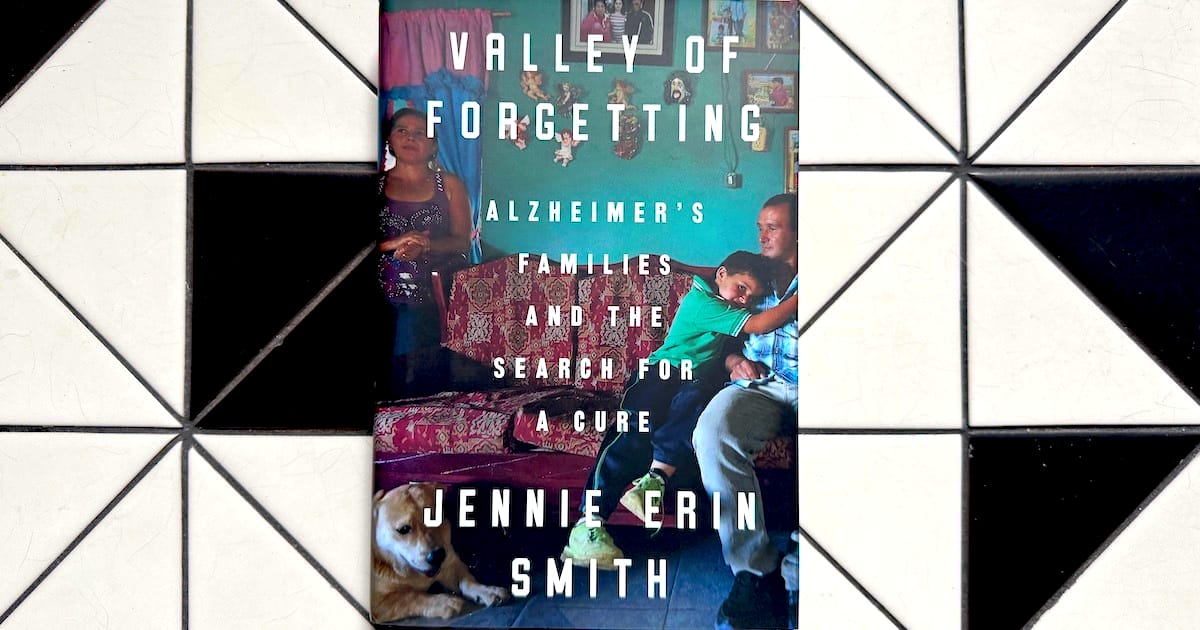
A handful of books are still in transit, but hopefully most club members now have their copies of January’s pick of the month, Valley of Forgetting. While I’d be surprised if many folks had a chance to read it yet, I did want to take a moment this week to share some reasons I liked it.

But first: I’m excited to say that we will be joined by Jennie Erin Smith for a live conversation and Q&A session on Thursday January 22nd. It’ll take place via Zoom on at 6pm Eastern/3pm Pacific and you’ll be invited to come talk with us.
These live chats are a great privilege and one of my favorite parts of Curious Reading Club, and they’re open to everyone on this list. Links will go out closer to the time, and you absolutely don’t have to have read the book in advance!
Now, let’s take a closer look at a few things that make Valley of Forgetting special.
⌘
It’s a careful look the way science happens
So many stories about scientific research focus on what is, one way or another, the Great Man theory. There’s a lone innovator, dogged and determined, and struck by inspiration. Perhaps there’s a patient who unlocks everything. Or maybe there’s a single moment of revelation; a discovery or insight that leads to a breakthrough. Those stories aren’t necessarily untrue, but they do feel very narratively-driven.
Valley lays out scientific collaboration in a way that feels much more reflective of how things actually work. You can see alternate versions where somebody like Francisco Lopera Repestro is held up as the main hero of the story. But Smith walks a more complicated tightrope, featuring a cast of researchers—led by Lopera and Ken Kosik—who overlap and collaborate and compete. They don’t always agree, and they have different motives, but it makes it clear that science is a team sport.
It puts Alzheimer’s patients first, in a non-judgmental way
While the scientists are one axis that anchor the book, it is braced by another: the families struck by Alzheimer’s. These are the people who matter the most, not just in the trajectory of Alzheimer’s cures, but in the day-to-day .
During the book we meet them, get close to them, see them and their families. That’s because (unlike many other viewpoints delivered to American readers about ordinary people’s struggles) Smith does this with a great deal of respect and honesty—so that even in the most dire or most downtrodden circumstances, there’s no poverty porn here.
It creates suspense in different ways
I’m not going to spoil things for you, but I’ve been following the trajectory of Alzheimer’s studies from a distance for a long time—and so I already had a broad idea of where the state of research is today. Going into the book I worried: Where would the suspense be?
But the story builds suspense and lays out the stakes in a surprising number of ways. Smith follows the various peaks and troughs, she slows down and speeds up, she takes digressions and looks at history and politics. There are perhaps obvious questions like will the studies find a treatment? and is the money going to run out? But on top of that she keeps laying out important, but often ignored questions, like how does somebody cope with knowing they are carrying an Alzheimer’s gene?
These get explored in ways I didn’t expect, and by the end—even though I knew what was going to happen—I was still wondering which way it would it go, and what the fallout would be. That’s pretty good work, I think.
⌘
Not part of Curious Reading Club already? We have three options for you—an ongoing subscription for just $30/month, or longer-term six- and 12-month options that mean they can fit your budget and reading ambitions.