- Curious Reading Club
- Posts
- Dragging them through the mud


Ida Tarbell
Muckraking—that is, investigative journalism that exposes corruption or malfeasance, dragging up the things that somebody wants to keep suppressed—has a long and fascinating history. The term itself is pretty backhanded, and is often used pejoratively, but really it’s based around the idea of the determined, focused crusading reporter trying to bring sunlight onto historical wrongs and find ways to put them right.
Back during America’s Gilded Age and into the early 20th century, reformist reporters uncovered all manner of bad behaviors and wrote about them in order to push for change. Ida Tarbell gave Standard Oil a lashing; Upton Sinclair famously wrote about the horrors of the meatpacking industry in the reportorial novel The Jungle; in the 1880s, Nellie Bly went undercover as an inmate in an asylum to write Ten Days in a Mad-House, creating a blend of muckraking and immersion journalism.
For me, this month’s pick No More Tears fits into that same lineage—a work that pulls together dozens of historical threads and mountains of evidence in order to show hidden wrongs and suggest ways to put them right. And, if you’re enjoying that book, here are three other works of investigative journalism that you might enjoy.

Perhaps the clearest intersection with Gardiner Harris’s book comes from Patrick Radden Keefe’s 2021 blockbuster Empire of Pain: The Secret History of the Sackler Dynasty (buy via Bookshop). It circles many of the same issues and pharmaceuticals that pop up in No More Tears, namely the callous promotion of opioids: drugs that have proven incredibly harmful to society but insanely profitable to companies like Johnson & Johnson and Purdue. It’s sickening and revelatory in the ways that good investigations are. Radden Keefe is a dogged reporter and a smart writer, and I’ll read anything he writes.
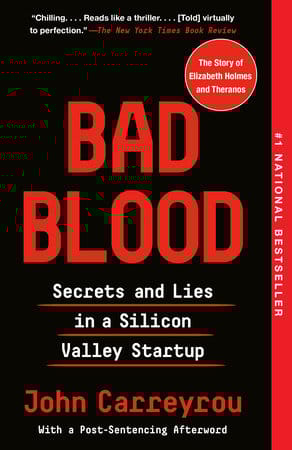
Still in the medical arena, when Bad Blood: Secrets and Lies in a Silicon Valley Startup (buy via Bookshop) by John Carreyrou came out in 2018, it felt like the beginning of a new era for tech exposes. Theranos, the blood testing startup that was, in fact, largely a hoax, felt emblematic of a tidal wave of tech companies that made promises they couldn’t keep. And Carreyrou’s forensic detail on the way that Elizabeth Holmes and Sunny Balwani duped the press, the public, their partners and investors still reads amazingly well almost a decade later.
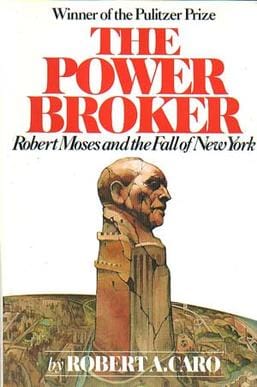
Another standard was set back in the 1970s when Robert Caro published The Power Broker: Robert Moses and the Fall of New York (buy via Bookshop), his exhaustive biography and demolition of a man who wielded his political clout to reshape New York into his own dreamland and playground… and then, because his influence was so strong, managed to create a new, car-centric, concretized America that we still live in today. I read it again a couple of years ago and it’s such an astonishing piece of work: not as incendiary as some of the other books here, but one that just carefully layers detail upon detail upon detail until the evidence is truly overwhelming. You’ve got to be impressed by the clarity and intimacy of Caro’s portrait.
⌘
One of the things that marks truly great muckraking is what happens afterwards. What are the consequences? Does anything change? The impact doesn’t always happen immediately, but the best investigations create a stink that nobody can get away from.
A few years after Tarbell’s expose, Standard Oil was broken up as a result of anti-monopoly laws. Sinclair’s meatpacking crusade led to two new Acts of Congress, and eventually the creation of the FDA. Robert Moses saw his prized reputation shattered, the Theranos founders went to jail, and the billionaire Sackler family lost their fortune in the wake of the opioid crisis.
What about Johnson & Johnson? We’ll explore that next time.
Onwards,
Bobbie