- Curious Reading Club
- Posts
- Waste not, want not

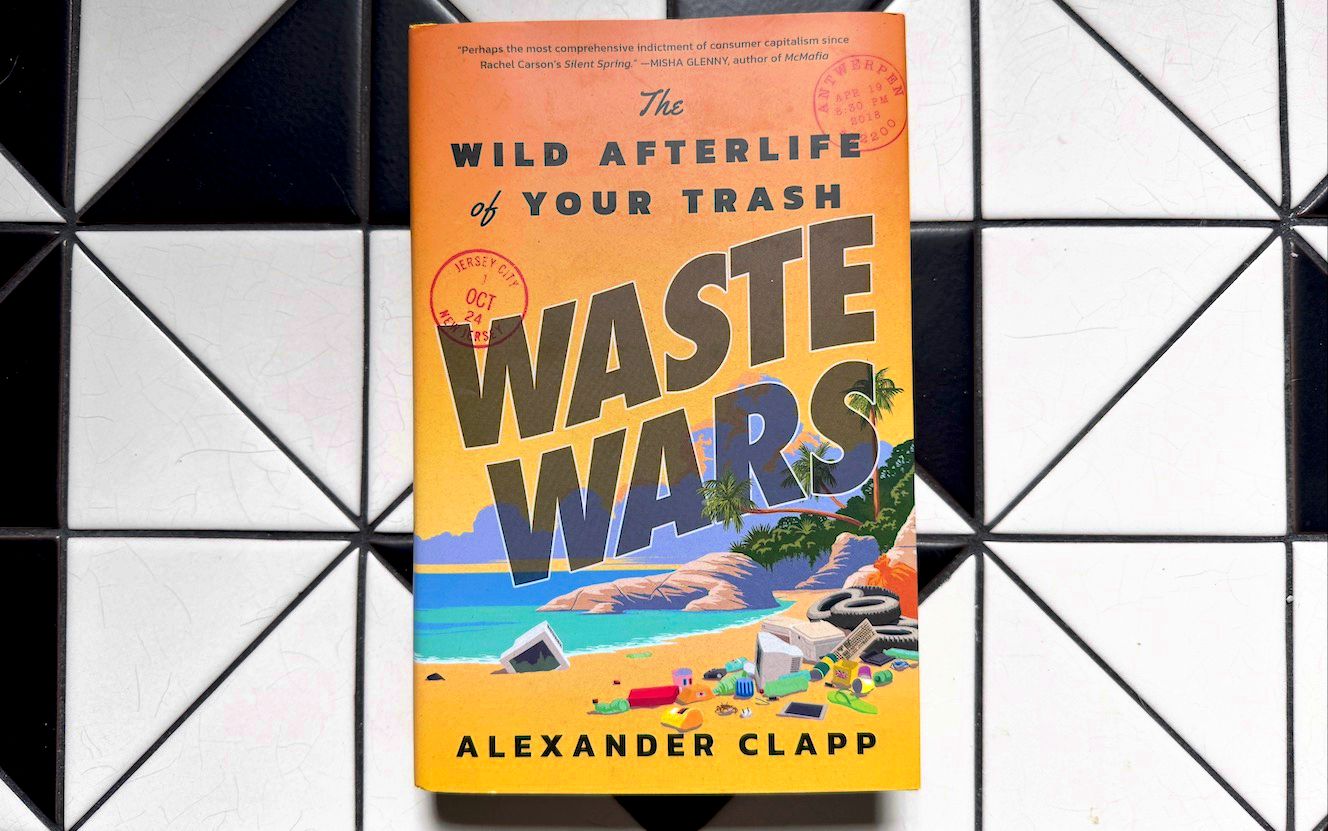
Now that pretty much everyone has their copy of our April pick, Waste Wars, I wanted to take a closer look at what makes this thing tick.
I'm not going to talk about the reporting legwork, which I mentioned in last week's newsletter, although Clapp going to the places he's talking about and painting vivid pictures of life there is one of the book’s strongest elements.
But there are other approaches in Waste Wars that set it apart for me, and that encouraged me to share this fascinating book with the club.
Here are some of the things I spotted.
It shows just how much money there is in trash
The focus in many parts of the book is on the material, in particular the things that are busted, broken, cast aside or thrown away. There is paper, there is plastic; there is electronic waste and there is toxic waste; there are cellphones and computers and cruise ships. But above all, there is another, less material force at work: money. The waste industry chases after vast sums of it, and it distributed in uneven ways that—whether large or small— manage to warp the shape of societies.
Waste Wars shows how money drives some people to become trash dealers (I thought Clapp's profile of recycling baron Steve Wong was particularly neatly done.) These are people motivated to find loopholes in the system, or arbitrage costs around recycling and refuse. But money also incentivizes other people further down the social scale—those with less choice, or fewer starting resources—and encourages them to live among the trash, to make their bread from having their hands deep in it.
The picture of life in Java towards the end of the book was one of the strongest examples: people who were so reliant on the money that waste brought them that they couldn’t see any other way of living.
⌘
It does a great job of exposing the myths
The great lie of recycling and re-use is evident all through the book, but I was particularly drawn Clapp's long section on the Ghanaian slum of Agbogbloshie, a place where theory and reality do not match up. Clapp looks at the used goods flooding into Ghana, mainly from Europe, and shows the network of currents pushing this constant stream of trash: secondhand ceiling fans from Italy, refrigerators from South Korea, kitchen appliances from the UK and office equipment from Germany and Norway.
"None of this was getting 'dumped' in Ghana," writes Clapp. "It had been shipped for the purpose of getting purchased by Ghanaians."
Except, we quickly discover, "by the time they are packed up and shipped off to the port of Tema, one thing is true of all these secondhand blenders and ceiling fans and desktop computers, regardless of who sent them. Study after study had revealed how at least one-quarter of them don't actually work—and within three years of their arrival in West Africa, the majority of those that did work no longer do."
This is probably a shock to those of us who get rid of our unwanted equipment on the understanding that they'll find a better life somewhere else. It's also a clear reminder that if something seems too good to be true, it probably is—and that we should question the underlying assumptions that these scenarios present. Why would the people of Ghana even really want the West's cast-offs?

Agbogbloshie, Ghana: Delbo Andrea / Shutterstock
It shows the dangers of externalization
Clapp's strongest suit, I think, is using the evidence he has gathered from the places he visits to tear down the veil that hides the underlying systems from us. This is more successful later in the book than it is at the beginning, but it is powerful stuff wherever it arrives.
He walks the reader carefully through the legal frameworks that are meant to protect consumers—and in fact just offload risk to other people who are further out of sight. (Europe should come in for heavy criticism here) and he discusses the lobbying and financial motives that result in desperate countries competing to be the best home for the worst materials.
And, crucially, he shows how these things have changed over time, as waste industries grew from peculiar oddities half a century ago into something vast and uncontrollable today.
The argument is laid out near the start of the book, when he says that "Over the last forty years, great quantities of your garbage has been relocated, at a profit, to the poorer countries of the world, often ending up in states that no so long ago released themselves from Western imperialism, only to find they have been turned into the receptacles of Northern consumerism."
His approach is also very useful when talking about change over time—as with China and recycling. Until 2018, China had spent decades being the destination for a vast amount of waste that was due to be reconstituted and used, even if huge volumes of it were simply buried or burned.
But China's status as the world's garbage was not a permanent situation, as many politicians and Western consumers were led to believe. It was merely part of a temporary push by China to access plastics to fuel its own economic and industrial explosion. The short version: rapidly increasing volumes Chinese electronics and consumer products required packaging and plastics, which it could get cheaply from recycling the West's rubbish. Once China had its own plastic supplies, it shut down recycling programs under the claim of environmental protection. Now we've ended up with countries like Indonesia, Malaysia and Turkey scrambling to pick up the slack.
⌘
If you are reading the book, I hope you see some of these things and appreciate them. Or perhaps you have other opinions? Share them by emailing me at [email protected]
⌘